
On Friday 9 October 2026 at 6.00 pm, the Sala delle Otto Colonne at the Palazzo Reale will host “Da Parigi a Milano. Nei salotti dell’età napoleonica”, a musical journey between France and Italy in the time of Joséphine and Eugène de Beauharnais. For one evening, Milan’s former royal residence will thus reconnect with the musical world that enlivened the salons of the Napoleonic era.
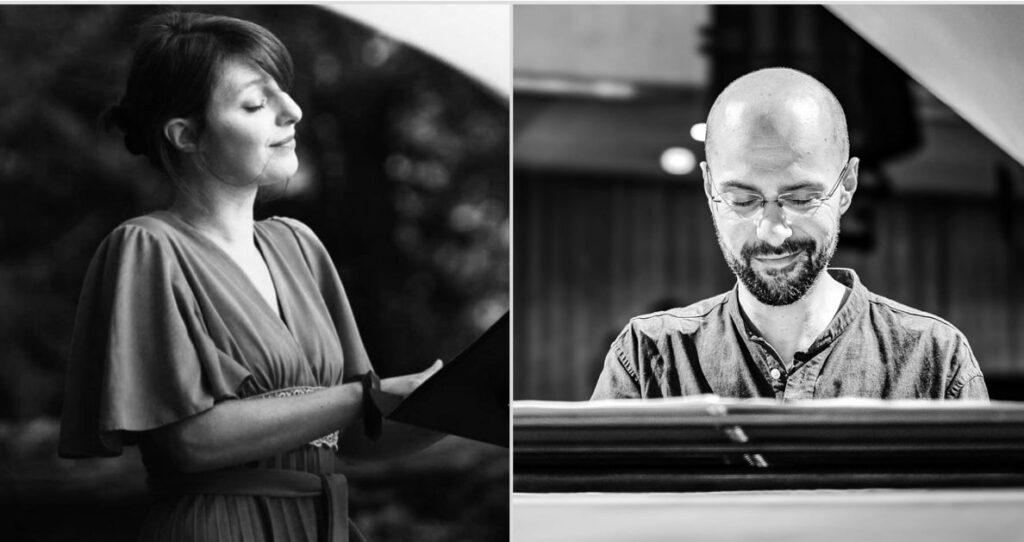
Organised by the European Federation of Napoleonic Cities – Destination Napoleon, the Palazzo Reale, Milan and New Athens – Centre for Romantic Pianos, the concert will bring together mezzo-soprano Coline Dutilleul and pianist and fortepianist Luca Montebugnoli to perform on an 1805 Broadwood square piano, a contemporary of much of the repertoire to be performed that evening.
A palace in the heart of the Kingdom of Italy
The choice of the Palazzo Reale is by no means insignificant.
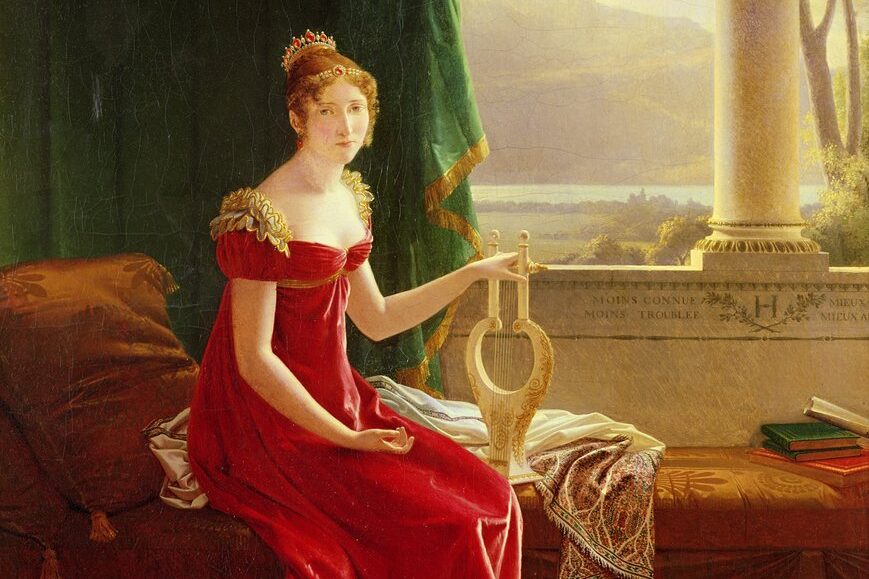
When Napoleon Bonaparte became King of Italy in 1805, Milan was the capital of the new Kingdom of Italy and Eugène de Beauharnais, Josephine’s son, became its viceroy. From 1805 to 1814, his Milanese court played an important role in the artistic, cultural and social life of the Kingdom. The Palazzo Reale still bears traces of this history today. In 2023, the palace hosted an exhibition entitled «A casa del Viceré. Eugenio di Beauharnais nella Milano napoleonica», dedicated to the art, taste and court life during his viceroyalty.
The state apartments had been refurbished under Napoleon’s supervision, as he wished the Milanese residence to echo the French palaces. The palace thus serves as a reminder that exchanges between Paris and Milan were not solely a matter of politics: they also encompassed the arts, artefacts, fashion, tastes and cultural practices.
It is precisely this interplay that the concert on 9 October aims to showcase.

From Paris to Milan: a musical Europe on the move
In the early 19th century, musical boundaries were particularly porous. Opera arias left the stage and found their way into drawing rooms; romances travelled far and wide, accompanied by their performers and sheet music; and works were transcribed and adapted for the instruments available. Music travelled far and wide.
Among them are Hortense de Beauharnais, daughter of Joséphine and sister of Eugène, who composed nearly 150 romances, as well as Pierre-Jean Garat, Hélène de Montgeroult, Jean-Louis Adam and Daniel Steibelt. Alongside them are Giovanni Paisiello, Gaspare Spontini, Niccolò Piccinni and Francesco Pollini.
Another of the programme’s attractions lies in this blend of genres. We move from French romance – which is deliberately intimate and text-focused – to the world of Italian bel canto; from vocal music to instrumental music; and from opera experienced on stage to the arias that people would then make their own at home.
Thus, Daniel Steibelt’s Fantasia on a tune from *Les Mystères d’Isis* – a French adaptation of Mozart’s *The Magic Flute* – bears witness to this practice of transforming and circulating the repertoire. Francesco Pollini’s *La Monferrina*, for its part, harks directly back to the musical scene in Milan in the early 19th century.
Listen to this piece on a piano from 1805
Much of the experience will depend on the instrument itself: a Broadwood square piano built in London in 1805.
This choice is not merely a matter of historical authenticity. Instruments from the early nineteenth century differ profoundly from the modern concert piano. Their balance between registers, their timbres and their relationship with the voice allow for a different approach to works written in that era.
In a romance, where the relationship between the text, the vocal line and the accompaniment is essential, this difference becomes particularly significant. It is one of the principles of historically informed performance: not to reproduce the past, but to recreate some of the acoustic conditions in which this music was originally conceived.
This is precisely the work being carried out by La Nouvelle Athènes, Coline Dutilleul and Luca Montebugnoli, particularly as part of the partnership established with the National Museum of the Castles of Malmaison and Bois-Préau.
The Sala delle Otto Colonne: a blend of splendour and remembrance
The setting adds an extra dimension to this experience.
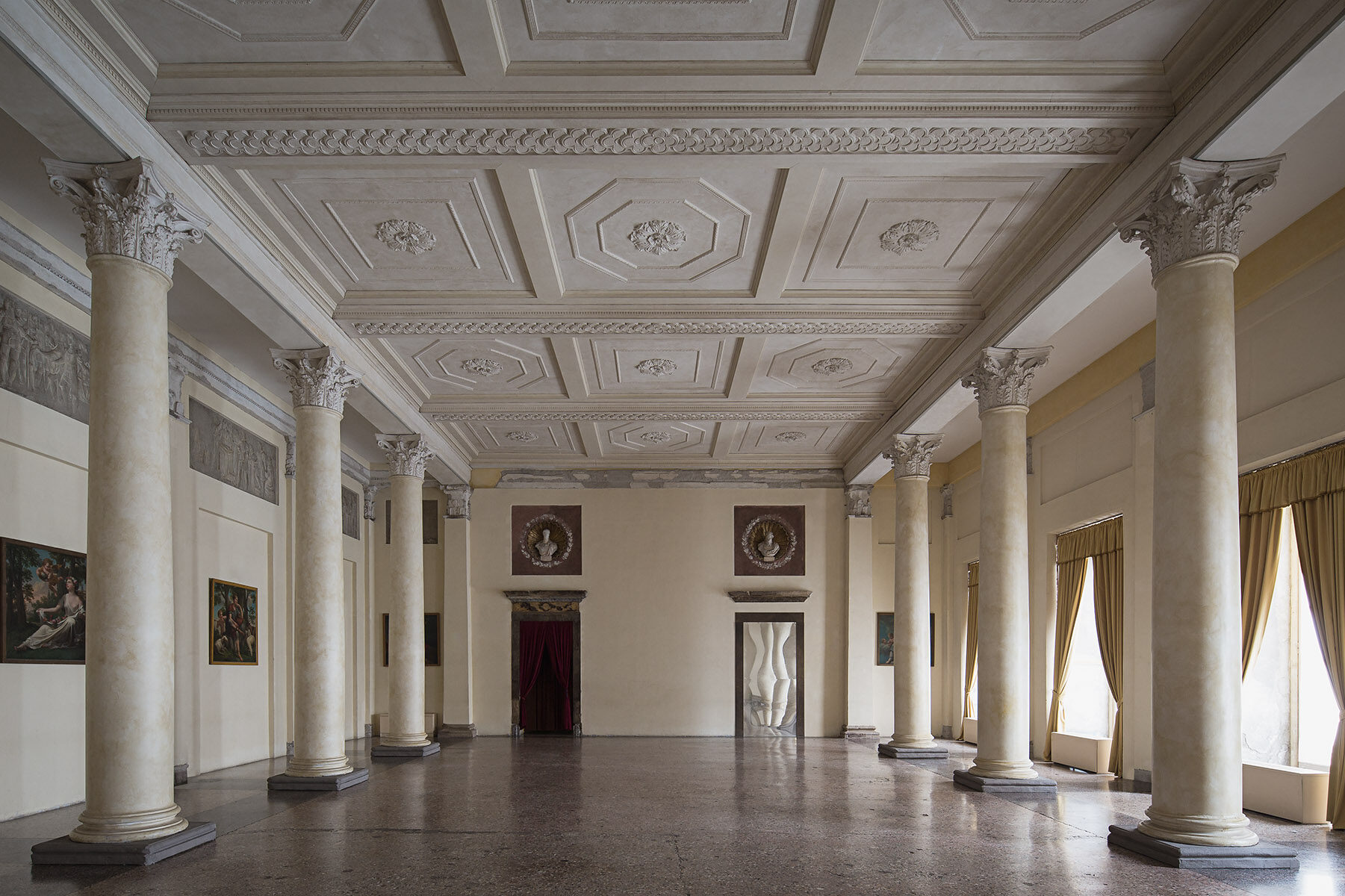
The Sala delle Otto Colonne itself bears the marks of the Palazzo Reale’s turbulent history. Before the war, this vast neoclassical hall featured a richly decorated coffered ceiling, stucco work from the school of Giocondo Albertolli and fifteen chandeliers made of gilded bronze and crystal.
The bombing raids of August 1943 radically altered the palace. All that remained of the Sala delle Otto Colonne were the outer walls. The columns and ceiling visible today are largely the result of a theatrical reconstruction carried out in the 1990s, whilst some of the original decorations have survived.
So, performing music from Eugène de Beauharnais’s era in this venue today takes on a special significance: the concert does more than simply take place in a monument. It reconnects a place, its history and the soundscape of an era of which it was itself a backdrop.
Turning a concert into a social gathering
This connection with the past will be reflected in the very spirit of the evening. In the early 19th century, much of this music was not intended for the vast concert halls we know today, but for the more intimate social setting of drawing rooms, where singers, instrumentalists and listeners shared the same space.
It is this spirit that the artists hope to recapture in Milan. The concert will be accompanied by a series of presentations enabling the audience to delve into the history of the works and understand the links that once united Paris, Malmaison and Milan.
In short, an invitation not just to listen to this music, but to rediscover the world in which it was born.
Practical information
Date: Friday 9 October 2026, 6.00 pm–7.30 pm
Location: Palazzo Reale, Hall of the Eight Columns, Milan
Free admission, subject to availability