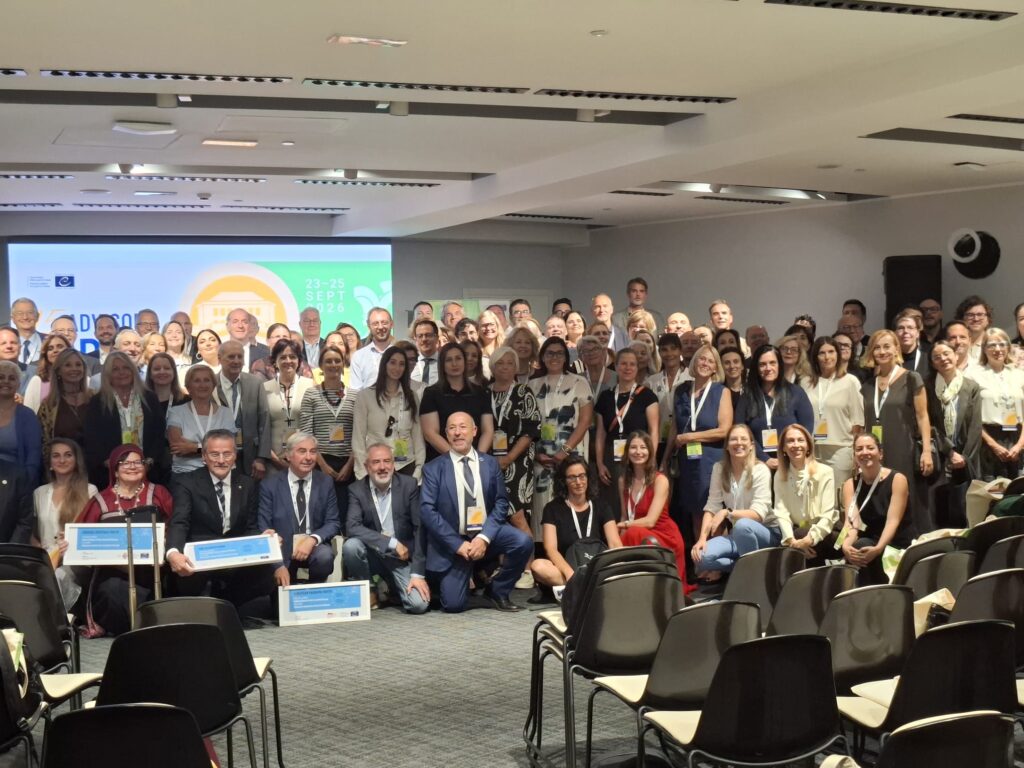
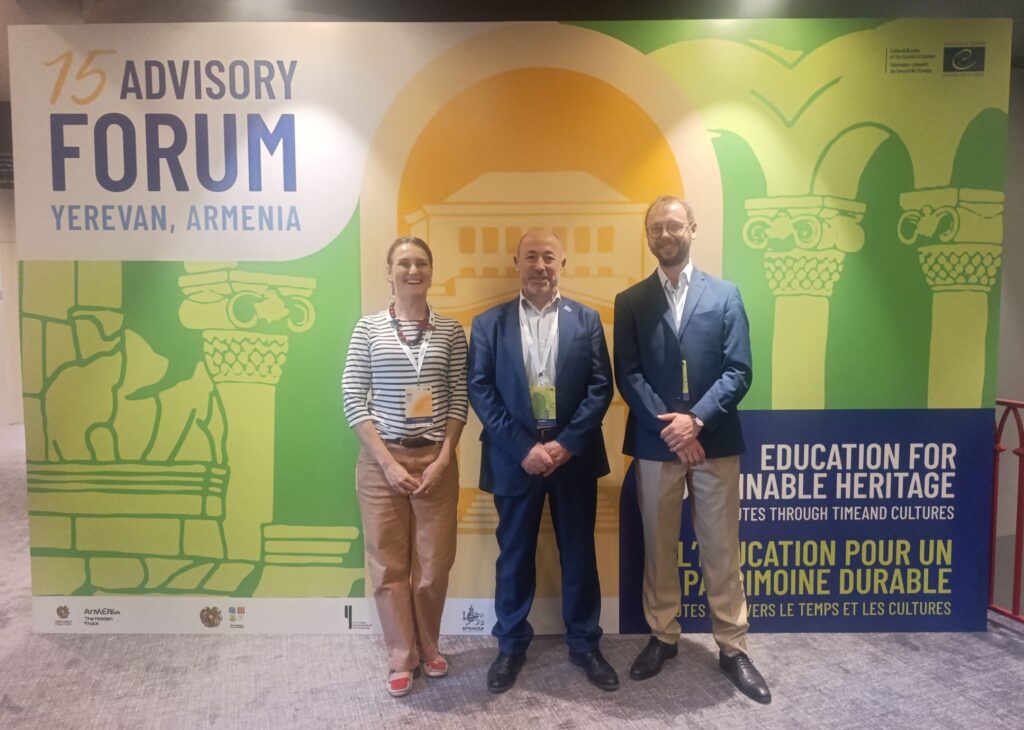
«Destination Napoléon» was actively represented at the 15th edition of the Council of Europe’s Annual Consultative Forum on Cultural Routes by its director, Eleonora Berti, and its coordinator, Jacques Chevin.
As a flagship annual event bringing together Member States, certified routes, international heritage protection organisations and local authorities, this forum serves as a vital platform for dialogue, strategic coordination and cross-border cooperation. This year’s event, held in the historic city of Yerevan, placed «cultural heritage and education» at the heart of its agenda.
A two-pronged strategic approach: network consolidation and cross-border expansion
In addition to the thematic round-table discussions, the Yerevan Forum provided an invaluable platform for direct dialogue with representatives of the Council of Europe’s member states, both those already participating in «Destination Napoleon» and those not yet involved.
For our delegation, these discussions helped to advance a two-pronged strategy:
Strengthening existing members: meeting with institutional representatives from countries where our network is already active in order to strengthen ongoing collaborations, consolidate national coordination and support local initiatives within our 60 member local authorities.
Opening up new horizons: establishing contacts with representatives, regions and heritage stakeholders from Member States that are not yet part of the network. These initial discussions focused on identifying new towns, regional areas and museums that could join the route in the future, thereby enriching and broadening the multi-perspective interpretation of European history that characterises «Destination Napoléon».
Heritage and education: a priority for our network
The central theme of the Yerevan Forum highlights the mutually reinforcing relationship between culture and education. Education does more than simply preserve our historical heritage; it also inspires future generations by passing on shared European values based on dialogue, creativity and mutual respect.
For Destination Napoléon, historic sites and Napoleonic heritage serve as vibrant platforms for learning and intercultural exchange. Transforming historical memory into structured educational activities enables our member local authorities to engage young citizens, foster critical thinking and highlight our shared European history from a variety of perspectives.
The Forum’s objectives are directly in line with the international frameworks set out by the Council of Europe’s Framework Convention on the Value of Cultural Heritage for Society (the Faro Convention) and by UNESCO’s MONDIACULT framework, both of which emphasise education in culture and the arts as an integrated ecosystem serving human development and sustainable local growth.
Key thematic areas for member cities
During the Forum’s working sessions, discussions focused on five priority areas which provide concrete inspiration for the future activities of the Destination Napoléon network:
- Accessibility and inclusion: ensuring that heritage trails and educational experiences are open, welcoming and accessible to the diverse range of local communities.
- Integration of cultural and educational policies: aligning local heritage initiatives with regional school curricula and municipal education programmes.
- Teaching practices throughout history: using historical trails, monuments and local archives as interactive teaching tools for schools and youth groups.
- Digital technologies in the service of heritage: harnessing digital media, immersive tools and online archives to make Napoleonic history more accessible and engaging for young audiences.
- Lifelong learning and community spaces: transforming museums, historical trails and parish heritage into inclusive learning environments for all age groups.
- Accessibility and inclusion: ensuring that heritage trails and educational experiences are open, welcoming and accessible to the diverse range of local communities.
Outlook for Armenia, the host country
The host city, Yerevan, provided an inspiring setting for these discussions, highlighting Armenia’s commitment to integrating cultural heritage into its education policy. Through initiatives led by the Armenian Ministry of Education, Science, Culture and Sport, the country has demonstrated how direct synergies between schools and museums can revitalise commitment to heritage.
The Forum was co-organised by the Council of Europe’s Enlarged Partial Agreement on Cultural Routes (EPA), the European Institute of Cultural Routes (EICR), the Ministry of Education, Science, Culture and Sport of the Republic of Armenia, the Tourism Committee of the Republic of Armenia and the Foundation for the Development of Culture, with the support of Yerevan City Council.
Outlook for the future: strategic opportunities for our members
One of the key outcomes of the Yerevan Forum is a new framework of recommendations designed to guide Cultural Routes in strengthening their educational dimension, in the run-up to the 40th anniversary of the Council of Europe’s programme.
For the member towns and institutional partners of Destination Napoléon, this framework provides a practical roadmap for:
- To develop joint educational projects and school exchange initiatives between member local authorities.
- To enhance the educational provision of local museums and sites linked to Napoleonic history.
- Apply for European calls for proposals focusing on heritage education, youth engagement and digital innovation.
«Destination Napoléon» remains committed to helping its members translate these European priorities into local actions that make a real difference. Further details and resources regarding the educational guidelines will be shared with network members in our forthcoming technical communications.