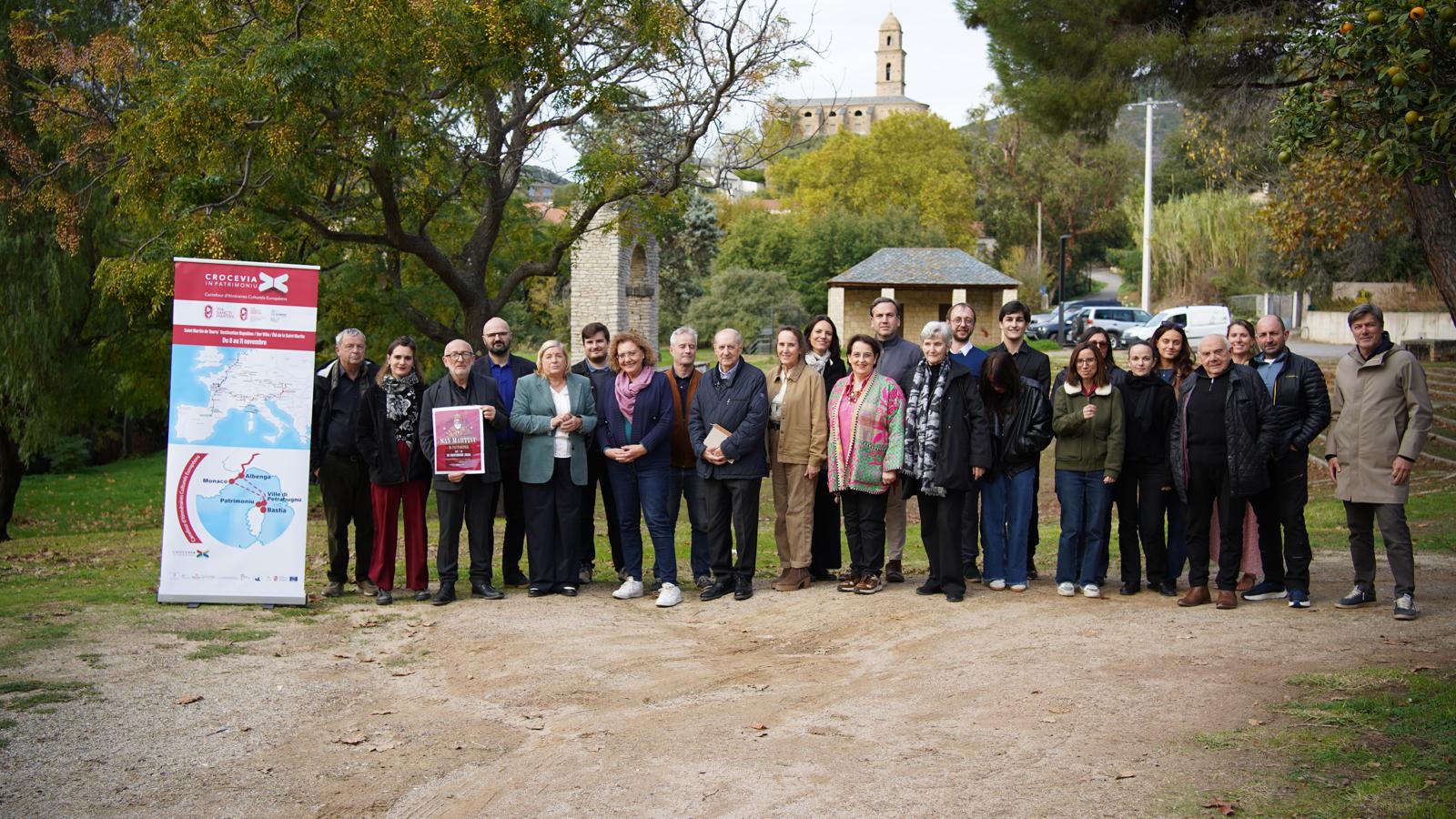
From 8 to 11 November 2026, the European network CROCEVIA brought together the Saint Martin de Tours, Destination Napoléon and Iter Vitis networks in Corsica. The meeting centred on the exchange of best practice, European projects, local initiatives and dialogue with young people.
On 8 November, in Patrimonio, the CROCEVIA Centre organised a round-table discussion on European Cultural Routes and their role in fostering dialogue between regions. With the 40th anniversary of the Council of Europe’s programme approaching, three networks operating in Corsica shared their experiences: Saint Martin of Tours, Destination Napoléon and Iter Vitis.
Following an opening address by Bruno Favel, Head of the World Heritage Mission at the Ministry of Culture, the discussions focused on best practice and European values. Destination Napoleon was represented by Jacques Chevin, European coordinator; Gwenola de Araujo, director of the Pontivy Communauté Tourist Office; and Marie Albertini, deputy mayor for culture at Corte Town Hall. Elisabetta Giudrinetti represented Iter Vitis, whilst Martine Campangne and Christian Andreani represented the Saint Martin networks.
Two European projects presented by Destination Napoléon
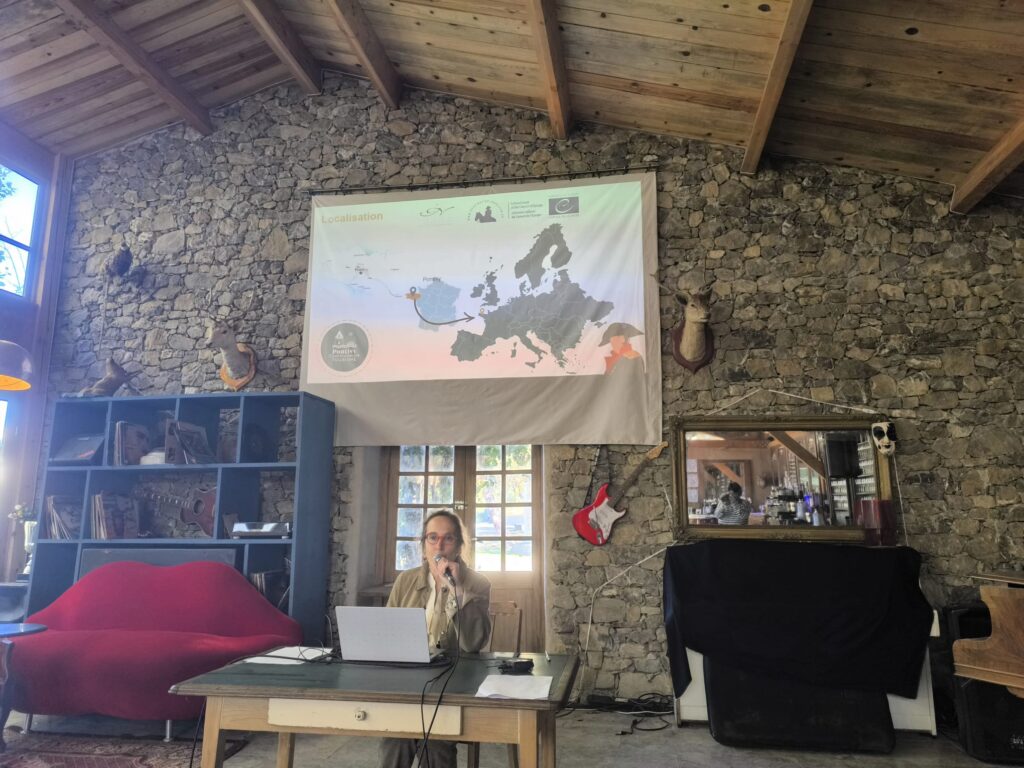
The presentation of ‘Destination Napoléon’ provided an opportunity, in particular, to highlight the two European projects developed by the Federation.
The project NAPO-HIST, funded by Erasmus+ and coordinated by the Federation, will run from 2026 to 2029. It aims to train heritage professionals, educators and re-enactors to convey Napoleonic history by fostering dialogue between historical sources and different European perspectives.
The project ELISA, selected as part of the Interreg Italy–France Maritime programme, will bring together Corsica, Tuscany, Sardinia and the Provence-Alpes-Côte d’Azur region. The figure of Élisa Bonaparte will serve as a common thread linking Napoleonic history, wine-growing heritage and Mediterranean landscapes, with the participation of young people and stakeholders in the tourism sector. Activities are scheduled to begin in 2027.
The presentations also highlighted local initiatives led by members of the network. The Pontivy Communauté Tourist Office spoke about its events centred on the history of Napoleonville : guided tours, family-friendly activities and an exploration of the town’s Napoleonic heritage. For Corte, Marie Albertini presented the Strada di Letizia, an initiative that promotes local heritage.
Involving young people in passing on knowledge
The morning continued with a presentation of the Erasmus+ project «Itineraries at Play», in partnership with the Casa familiare Campagnole di Sorbu and BTS students from the Lycée Vincensini in Bastia. A workshop was then held, giving the young people the opportunity to talk with representatives from Itinéraires culturels.
This meeting gave the younger generations a tangible voice in discussions on the transmission of heritage and the evolution of cultural practices.
Corsican history and traditions on the programme
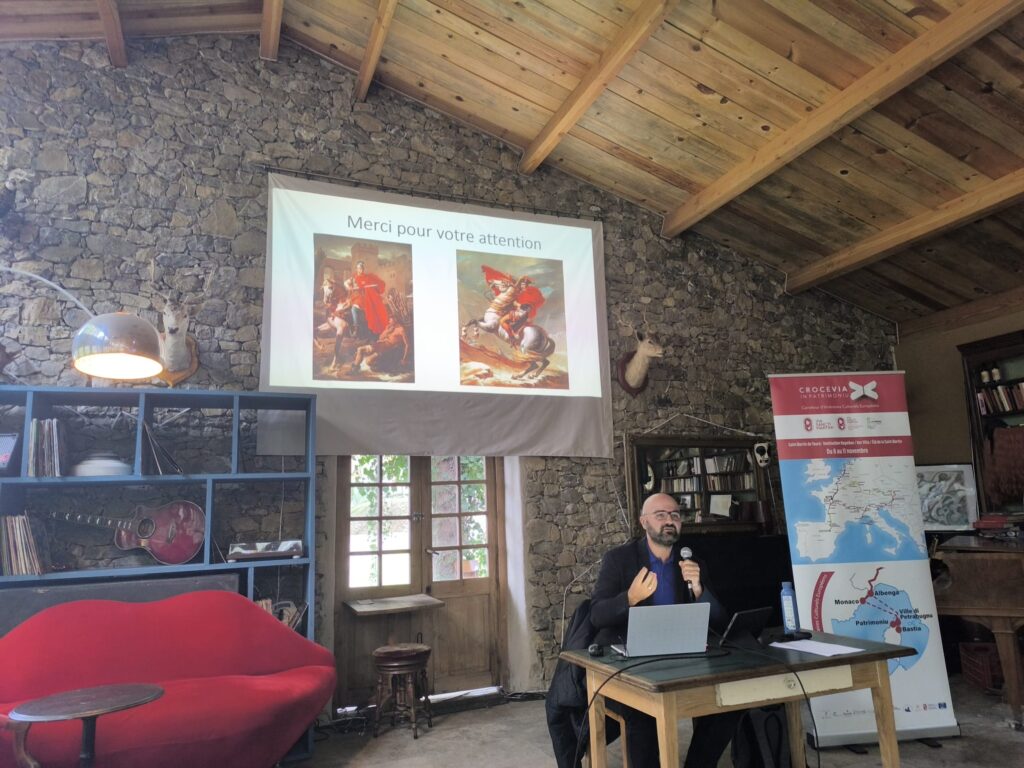
On 8 November, Donatien Mazany, a Doctor of History at the University of Tours and the Catholic Institute of Paris, gave a lecture on a legend from Tours linking Napoleon and Saint Martin in the late 19th century.
The following day, Professor Antoine-Marie Graziani, of the Pasquale Paoli University of Corsica and a senior member of the Institut universitaire de France, explored the links between Pasquale Paoli and Napoleon, the Corsican privateer fleet and the islands of the Tuscan archipelago. This approach placed Napoleonic history within the context of island history and Mediterranean relations.
The Carrefour also showcased the island’s living heritage: sacred chants, polyphonic singing, traditional skills relating to Corsican wool and the traditions of Saint Martin’s Day. A day organised in collaboration with the ODARC highlighted Corsican rural life and livestock farming through the countryside «Agnella, nustrale».
European cooperation rooted in local communities
From Patrimonio to Bastia, the programme brought together European networks, local authorities, training institutions and local stakeholders. The signing of a memorandum of understanding between Iter Vitis and the Corsican Regional Chamber of Agriculture also highlighted the links that the Itinéraires can forge with partners on the ground.
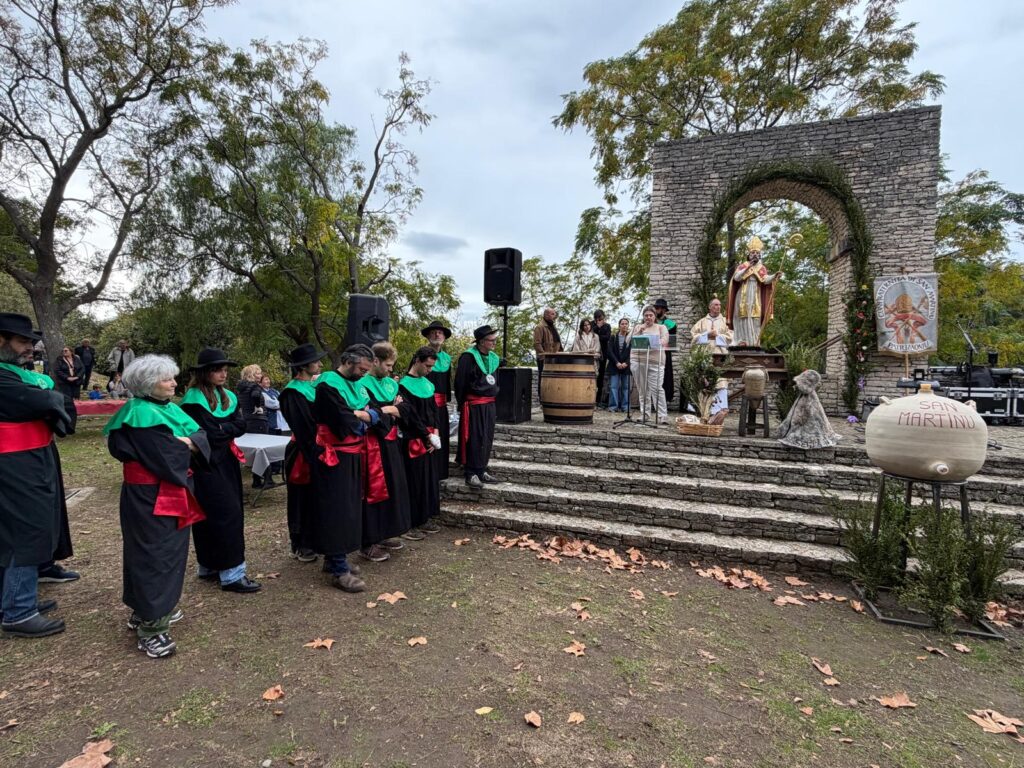
On 10 and 11 November, the Carrefour event continued with celebrations to mark San Martinu in Patrimonio. The vigil of St Martin, sung in polyphony, followed by the solemn Mass, the blessing of the new wine and St Martin’s cloak, and the procession, all served to honour Corsican religious and cultural traditions. A tribute was also paid to those who died in the Great War at the war memorial.
By bringing together cultural routes, local stakeholders, young people and institutional partners at Patrimonio, the CROCEVIA Forum showcased the richness of European cooperation. These exchanges brought together history, heritage and grassroots initiatives in a spirit of dialogue and knowledge-sharing.
The European Federation of Napoleonic Cities would like to thank Martine Campangne and Christian Andreani for organising this event, as well as all the speakers, partners, pupils and participants. The discussions highlighted how European cooperation can foster dialogue between different histories and promote local initiatives.